

How to Use the UK Environmental Principles Policy Statement in Coral Reef Advocacy Campaigns
Coral reefs are not an obvious item on a Whitehall agenda. Cold-water coral reefs off Scotland, and the tropical reefs of the UK Overseas Territories, are out of sight for most officials — which is exactly why the Environmental Principles Policy Statement is worth learning. It hands campaigners a documented, government-issued vocabulary for arguing that reefs belong in decisions where they are usually an afterthought. Used properly, it turns a moral case into a procedural one, and procedural arguments are much harder to dismiss with a shrug.
The statement will not save a reef on its own. It will not substitute for marine protected areas, fisheries controls, water quality enforcement or climate action. What it can do is make it harder for a department to say that reef concerns are someone else’s problem, or that they were never considered at all. That is a modest but real advantage, and in policy advocacy modest advantages compound.
What the statement is, and what it is not
The Environmental Principles Policy Statement (EPPS) comes from the Environment Act 2021. Section 17 requires the Secretary of State to prepare a policy statement on environmental principles and to set out how they should be interpreted and applied. The final statement, published after consultation, is only a few pages long. Read it in full before you cite it; it takes less time than most consultation documents you have skimmed this year.
Five principles sit at its centre:
- Integration — environmental protection built into the making of policies, not bolted on at the end. For reefs, this means asking how fisheries, trade, finance, defence, transport and overseas development policy each affect coral habitat.
- Prevention — stopping damage before it happens. This is the principle to use when a policy would extend an activity into known coral habitat or weaken a protection that currently holds.
- Precaution — acting where evidence is uncertain but the risk of serious harm is real. It fits proposals for new dredging, seabed mining exploration, or fishing methods in or near coral habitat whose effects are poorly understood.
- Rectification at source — dealing with the cause rather than the symptom. Agricultural runoff, sewage discharges and sediment plumes are upstream causes of reef decline, so this principle belongs in land-use and water policy arguments.
- Polluter pays — those who cause environmental damage bear the cost. Use it when the argument turns on who funds restoration, monitoring or compensation.
Ministers must have due regard to the statement when making policy, and the statement explains how each principle should be applied in practice. That is a procedural duty, not a right to a particular outcome. It does not by itself create a new cause of action, and it does not govern individual project decisions: a planning application or a marine licence for a single development is not a policy. If your campaign looks likely to become legal in nature, take advice from a solicitor or barrister with environmental law experience before you build an argument on the EPPS. What follows is campaigning guidance, not legal advice.
Match the right principle to your reef issue
Specificity is what makes this work. A submission that recites all five principles reads like a checklist; one that pins a single principle to a single decision tends to get a reply. Officials are used to being told that the environment matters. They are less used to being shown exactly which principle applies, to which policy, and what it requires them to do differently.
If the policy concerns deep-sea mining or new exploratory dredging near cold-water coral, lead with precaution. If it would permit bottom trawling in an area where coral bycatch is documented, lead with prevention. If it concerns farm support, sewage infrastructure or coastal development rules, lead with rectification at source. If it concerns who pays for reef restoration after a spill or a shipping incident, lead with polluter pays. And if a department claims reefs are “not their policy area,” lead with integration, because that principle exists precisely to prevent environmental harm from being siloed away from trade, finance, defence and transport decisions.
Aim at policy, not projects. The statement applies when policy is being made or reviewed, so focus there: strategies, plans, frameworks, guidance, funding criteria, licensing regimes and international positions. Before writing anything, answer three questions. Is there a published decision, a live consultation or a stated intention? Which minister or department owns it? What is the timetable? A well-aimed submission sent after a decision is made is wasted effort.
Then trace the reef connection honestly. If you have to stretch, say so — officials notice, and it costs you credibility on the next point. In England, useful entry points include Defra and its agencies, the Marine Management Organisation’s licensing frameworks, the Environmental Improvement Plan and its targets, and any strategy touching fisheries, marine spatial planning or water quality. Where UK finance, insurance or supply chains touch tropical reefs, the Treasury, the Foreign, Commonwealth and Development Office and the Department for Business and Trade become relevant too.
Put it in writing: a submission that gets read
Written submissions are where the EPPS becomes useful. Keep them short, named and procedural. A two-page document that identifies the policy, quotes the relevant principle and asks a clear question will outperform a ten-page lament. Use the following structure as a starting point:
- Identify the decision. Name the policy, consultation or review, and state the department or minister responsible.
- State your interest. One sentence on your organisation, network or evidence base.
- Name one principle. Do not list all five. Choose the one that fits best and say why.
- Apply it to the policy. Explain what the principle requires in this specific case — an assessment, an exclusion, a monitoring condition, a funding change or a different timetable.
- Make a specific ask. Ask for a meeting, a written response, or for your evidence to be placed on the record.
A paragraph like this can do a lot of work:
In developing [policy name], we ask the department to apply the precaution principle in the Environmental Principles Policy Statement. The scientific evidence on [activity] in [habitat] is uncertain, but the risk of serious and possibly irreversible harm to [reef] is credible. The policy should therefore [exclude the activity / require a full assessment / set a monitoring condition]. We would welcome a meeting to discuss the evidence base.
That wording is not magic. Its value is that it forces the official to confront a procedural question: if the principle applies, what did the department do about it? If the answer is nothing, the paper trail starts to matter.
A worked example: precaution and deep-sea mining
Suppose a department is consulting on a future licensing regime for seabed mineral exploration near a cold-water coral area. You do not need to prove that mining will destroy the reef. You need to show that the evidence is incomplete and that the risk of serious harm is credible. That is the threshold language of precaution.
Your submission might point to gaps in baseline surveys, uncertainty about sediment plumes, and the slow recovery rates of coral ecosystems. Then it could ask the department to commit to a clear exclusion zone, independent monitoring and a review clause before any licence is granted. Framed that way, the argument is not simply “reefs are precious.” It is “the policy must reflect the precaution principle before it proceeds.”
This approach also gives you a follow-up question. If the department later says it considered the environment, you can ask for the record showing how it applied precaution, what evidence it used, and why it rejected stronger protections. The answer may be inadequate, but the question is legitimate and hard to ignore.
Common pushbacks, and how to answer them
- “The EPPS is only for policy, not this decision.” Agree if the decision is a project application. Then redirect your argument to the strategic policy, plan or framework that sits above it.
- “This department has no marine expertise.” That is exactly what integration is for. Explain the specific route by which the policy affects reef health, even indirectly.
- “We already considered the environment.” Ask for the record. Which principle was applied? What evidence was used? What changed as a result?
- “The evidence is uncertain.” That is when precaution applies. Uncertainty is not a reason to delay protection when the risk of serious harm is real.
- “Reefs are a matter for another country.” For UK Overseas Territories, the UK government retains real levers over finance, shipping, insurance and international positions. Integration makes those links fair game.
Build the paper trail
Policy advocacy is often less about a single meeting and more about creating a record that others can use later. Keep copies of every submission, email and response. Log dates, names and commitments. Use freedom of information requests or environmental information regulations where relevant, and ask parliamentary questions through supportive MPs or peers. If a department says it has applied the principles, ask it to publish the assessment. If it says it has not, ask why not.
This record also helps coalition partners. A clear timeline of what was asked, when, and what answer came back is more useful than a general complaint that nobody listened. It can be passed to journalists, select committees, auditors or legal advisers without starting from scratch.
The Environmental Principles Policy Statement is not a silver bullet. It is a lever. For coral reef campaigners, the trick is to use it early, use it precisely, and use it in writing. A reef may never appear on a Whitehall whiteboard by name, but the principles can force the question that puts it there: what does this policy do to the environment, and who is accountable for the answer?
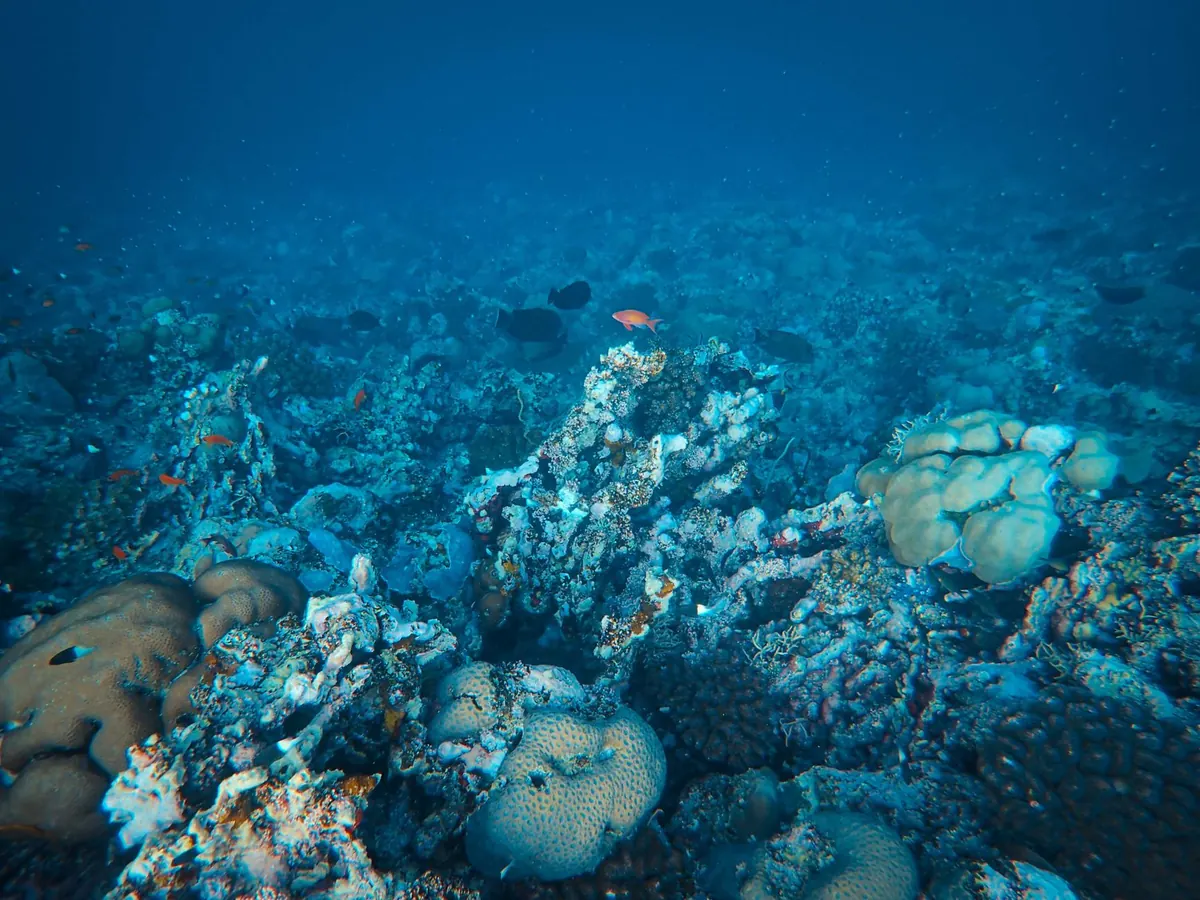
Photo: Francesco Ungaro / Pexels